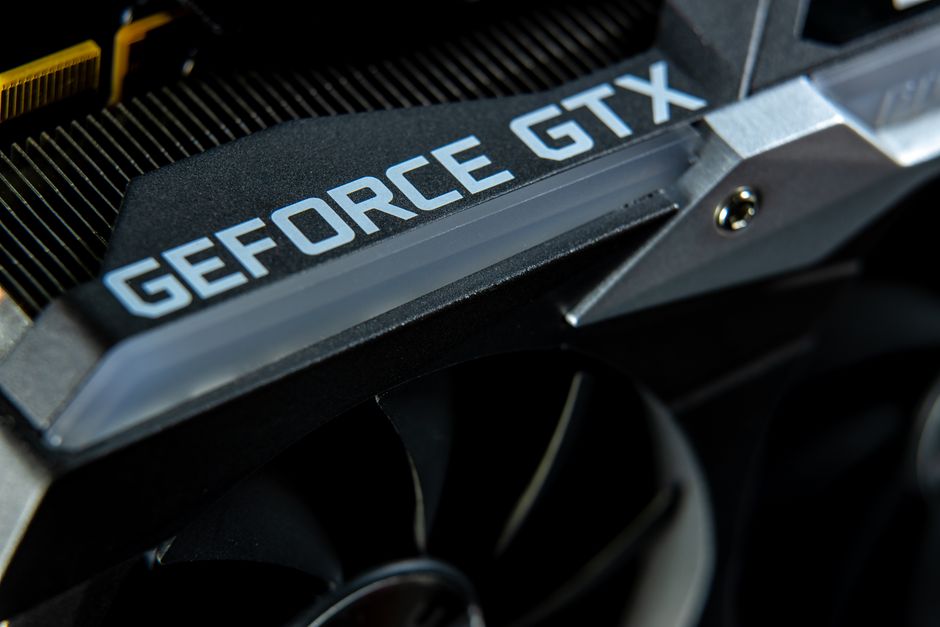
Best Budget Graphics Cards for Gaming in 2024
Selecting a graphics card for 1080p gaming on a constrained budget requires careful examination of performance, power efficiency, and acoustic output. In 2024, the market offers several options priced under three hundred dollars, each with distinct characteristics. This article documents the findings from a series of controlled tests conducted by TechWise on five such models currently available in the United States. The goal is to present a transparent comparison of key metrics without offering direct purchasing advice.
Modern games vary widely in their hardware demands, and a card that excels in one title may not perform as well in another. Therefore, the testing approach prioritizes consistency and reproducibility. By evaluating frame rates across multiple genres, measuring power consumption under load and idle, and recording noise levels in a quiet environment, the data provides a multifaceted view of each product. Readers can use this information as a reference when assessing which trade-offs align with their personal priorities.
It is essential to recognize that real-world results are influenced by the entire system configuration, including the CPU, memory speed, and driver optimization. The observations presented here are based on a specific setup and may not exactly replicate every user’s experience. They are intended to illustrate relative differences rather than absolute performance guarantees.
Testing Methodology
All tests were performed on a dedicated test bench featuring a mid-range CPU, 16GB of DDR4 memory, and a solid-state drive. The operating system and drivers were updated to the latest stable versions before testing began. Five games were selected to represent a range of graphical demands: a competitive first-person shooter, an open-world action game, a strategy title, a racing simulator, and a recent AAA role-playing game. In each game, a fixed in-game benchmark or a replay sequence was used to ensure consistency across test runs. Graphics settings were set to the medium preset at 1920×1080 resolution, with any variable rate shading or dynamic resolution scaling disabled.
Power draw was measured using a power meter connected to the wall outlet, capturing total system consumption. To isolate GPU power, the baseline power draw of the system without a graphics card was subtracted. Noise levels were recorded with a calibrated sound level meter placed 30 centimeters from the card’s fans, inside a quiet room with an ambient noise floor of 20 decibels. Each card was run under load for 30 minutes to reach thermal equilibrium before noise and power measurements were taken. All tests were repeated three times and averaged to reduce anomalous results.
This methodology was chosen to minimize external variables and provide a reliable basis for comparison. While it does not replicate every possible gaming scenario, it offers a consistent framework for evaluating the five GPUs.
Performance Observations at 1080p
Frame rate results varied depending on the game and the architecture of each GPU. In the competitive first-person shooter, two of the cards delivered average frame rates above 100 frames per second, while the remaining three fell into the 70 to 90 frames per second range. The open-world action game proved more demanding, with most cards averaging between 55 and 70 frames per second. The strategy title showed less variation, with all five GPUs producing 60 to 80 frames per second. The racing simulator presented a different pattern, where the card with higher memory bandwidth performed noticeably better than others.
The AAA role-playing game, known for its heavy texture and lighting effects, brought the largest spread in performance. Here, the most capable model averaged 62 frames per second, while the least capable hovered around 45 frames per second. These numbers indicate that for certain modern titles, the choice of GPU can affect whether the game runs smoothly or experiences occasional stutter. However, in less demanding or well-optimized games, the differences among the five cards were often minor.
It is worth noting that all tested models could provide a playable experience at medium settings in the majority of current titles. Lowering texture quality or reducing shadow detail could further improve frame rates, but this was not part of the standardized test. The observations suggest that the performance gap between the cheapest and most expensive cards in this segment is present but not always decisive.
Power Draw and Energy Efficiency
The power consumption measurements revealed a clear hierarchy among the tested GPUs. Under sustained gaming load, the most efficient card consumed approximately 105 watts, while the least efficient consumed around 185 watts. This difference of 80 watts corresponds to a potential variation in electricity usage over time. For a user gaming four hours per day, the difference in annual electricity cost, assuming standard US rates, would be roughly fifteen to twenty dollars. Idle power draw was more uniform, with all cards consuming between 12 and 18 watts.
Efficiency, defined as performance per watt, also varied. Some cards achieved higher frame rates while consuming less power, making them more effective from an energy standpoint. Others required more energy to reach similar performance levels. Thermal management was closely tied to power draw; cards with higher consumption generally operated at higher temperatures, though cooling design played a significant role. The most power-hungry model utilized a dual-slot, dual-fan cooler that kept temperatures under 75°C, while a similarly power-demanding card with a smaller heatsink reached 82°C.
These observations indicate that power draw and thermal behavior are not solely determined by the GPU chip but also by the implementation of the cooling solution. Users with smaller cases or limited airflow may need to pay attention to these characteristics, as higher temperatures can lead to throttling or increased fan noise.
Noise Levels and Cooling Behavior
Acoustic performance was one of the most divergent characteristics among the five GPUs. Under full gaming load, the quietest card registered 34 decibels from the measurement position, which is barely audible in a typical room. In contrast, the loudest card reached 47 decibels, a clearly noticeable hum. The difference was attributable to both fan size and fan curve tuning. Cards with larger, slower-spinning fans tended to produce less noise than those with smaller fans spinning at higher RPMs.
At idle or low desktop loads, several cards featured a zero-RPM fan mode, meaning the fans stopped completely until the GPU temperature crossed a threshold. This feature contributed to a silent experience during basic tasks such as web browsing or video playback. Other models maintained a low fan speed at all times, producing a constant but unobtrusive airflow sound. The choice between these approaches depends on user preference; some may prefer the assurance of continuous airflow, while others value complete silence when the system is not under load.
Cooling efficiency also affected noise. A card that ran cooler allowed its fans to spin slower to maintain the same temperature, resulting in a quieter operation. Conversely, a card with a less effective heatsink required higher fan speeds, increasing noise. Over time, dust accumulation can further degrade cooling performance, potentially increasing noise. Regular cleaning and proper case airflow are factors that can help maintain the acoustic profile observed in controlled testing.
Additional Considerations for Selection
Beyond the measured metrics, several practical factors should be taken into account when evaluating budget graphics cards. Physical dimensions and clearance are important; some cards are longer or thicker than others, and may not fit into smaller cases. Power supply requirements also differ, with some models recommending a minimum wattage and specific PCIe power connectors. Checking the manufacturer’s specifications against the existing system configuration is a necessary step before making a purchase.
Driver and software support can affect both performance and feature availability. Certain technologies, such as image upscaling or low-latency modes, may be available only on specific architectures. These features can improve the gaming experience in supported titles without requiring higher hardware investment. However, their effectiveness varies by implementation and game compatibility. It is also worth noting that driver updates over the lifetime of a product can incrementally change performance and stability.
The amount of video memory is a critical consideration for future-proofing. While most current 1080p games run well with 6GB or 8GB, some newer titles already recommend 8GB for high textures. Models with 4GB may face limitations in the near future, requiring lower texture settings or causing reduced frame times. For those planning to keep a graphics card for several years, opting for 8GB models may offer more longevity.
Finally, warranty length and customer support reputation vary among manufacturers. Although this is separate from hardware performance, it can influence the overall ownership experience. TechWise’s testing does not address these factors, but they are relevant when making a final choice. All of the above considerations require individual prioritization based on the user’s specific needs and constraints.